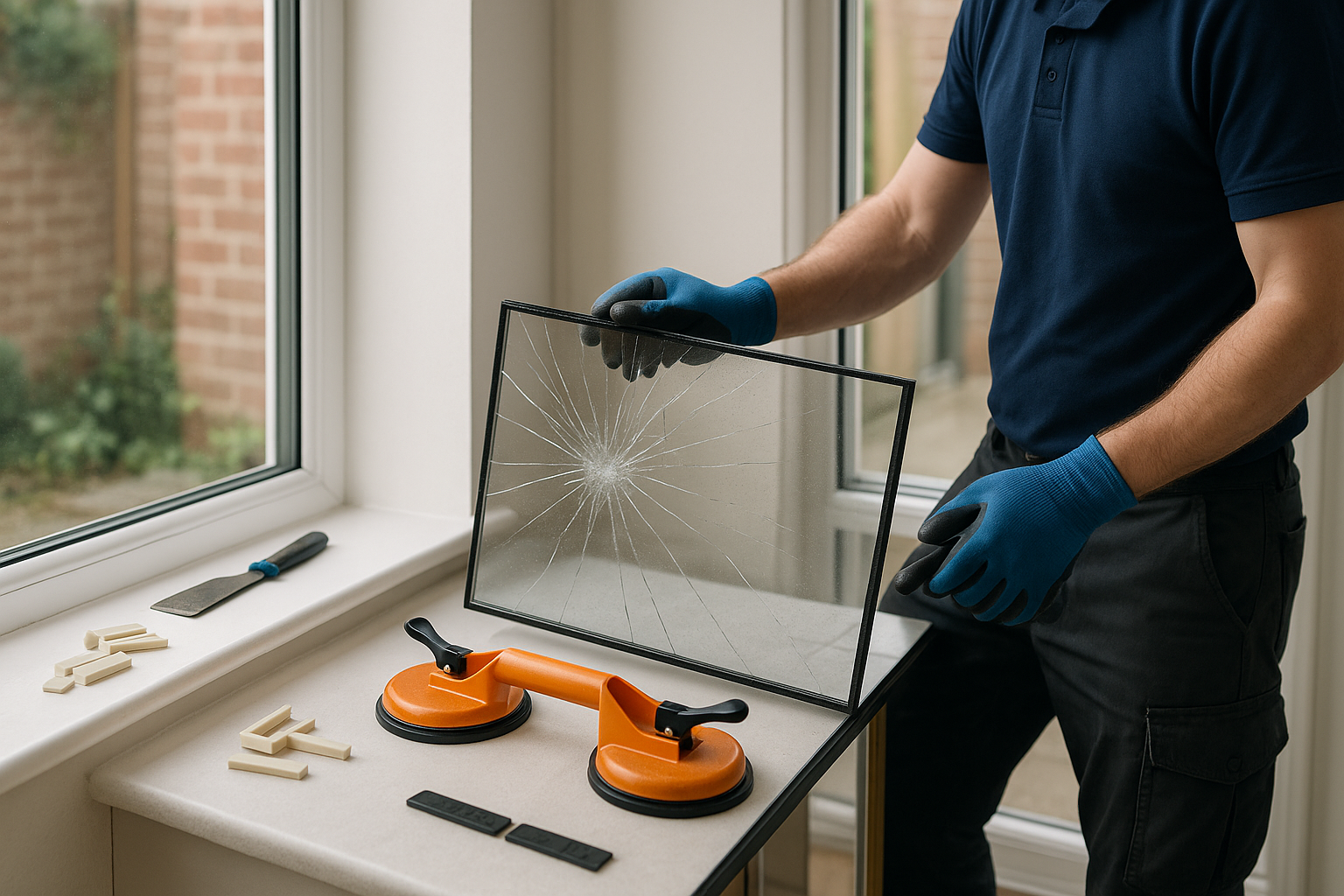
If you need an emergency glazier in Clerkenwell, the priority is simple: make the property safe, remove dangerous loose glass where it can be done safely, and arrange the right replacement after the immediate risk has been dealt with. That is the focus of our 24-hour glazing service for homes, flats, shops and managed buildings across Clerkenwell and nearby areas including Farringdon, Barbican, Angel, Holborn and King’s Cross.
Emergency glazing is not just about putting glass back in a frame. The right approach depends on the glass type, the window or door style, the condition of the frame, and the reason the breakage happened in the first place. A cracked sash pane in a period property near Exmouth Market needs a different repair approach from smashed shopfront glazing close to Farringdon Station, and a failed double-glazed unit in a uPVC casement window may need measuring, sealing and replacement rather than a simple pane swap.
We help customers who are dealing with broken window glass, smashed door glass, break-in damage, storm damage and unsafe cracked panes. If the glazing is dangerous, keep people and pets away from the area and call 020 3670 2643 for advice on the next step. In many cases, the first visit is about making the opening secure before replacement glass is supplied and fitted.
Our service covers homeowners, landlords, tenants, shops and property managers who need practical help with emergency glazier callouts in Clerkenwell, broken window make-safe in Clerkenwell, smashed glass removal in Clerkenwell, temporary boarding and secure glazing in Clerkenwell and replacement glass after emergency damage in Clerkenwell.
Because glazing is a safety issue, it is usually better not to attempt DIY glass removal. Broken panes can have hidden stress cracks, sharp edges and unstable fragments still held in the frame. A make-safe visit reduces the risk of injury and helps prevent weather damage, unauthorised entry and further breakage.
Call 020 3670 2643 or email info@glazier-clerkenwell.co.uk if you need urgent glazing help in Clerkenwell.
Emergency Glazier Callouts in Clerkenwell
An emergency glazing callout is usually needed when a pane has failed suddenly and the property is left exposed or unsafe. In Clerkenwell, that often means a smashed sash window in a flat, a damaged patio door panel, a cracked internal glass door, or shopfront glazing that can no longer stay in place.
On arrival, the first job is to assess the immediate risk. That includes checking whether the glass is loose, whether the frame has been damaged, whether there are sharp shards on the floor or in the opening, and whether the area needs to be isolated before any work starts. For older timber windows around Clerkenwell and nearby Holborn, the frame itself may be part of the problem if rot or movement has weakened the glazing pocket. For uPVC windows and doors, failed sealed units or damaged beading can alter the repair method.
We also look at access and use of the property. A landlord may need the opening secured before a tenant returns. A shop near Smithfield Market or the Barbican Centre may need the frontage protected before trading hours. A homeowner near Sadler’s Wells may want a short-term make-safe first, then a measured return visit for the correct glass.
Our recent local work has included a broken window make-safe in Angel, a door glass replacement in Holborn, and a sash window glass repair in King’s Cross. Those jobs show the kind of practical, site-specific decisions emergency glazing often requires: remove the danger, secure the opening, measure accurately, then fit the correct replacement rather than forcing a one-size-fits-all solution.
Important: customers should ask for current insurance details, trade registration details if relevant, and a clear explanation of the repair plan before replacement glazing is booked. For a safety-critical job, clarity matters more than guesswork.
Broken Window Make-Safe in Clerkenwell
A broken window make-safe is the immediate action taken when a pane is damaged but the final replacement cannot be fitted right away. This is common after accidental impact, attempted forced entry, wind damage, or a cracked pane that has become unstable.
Make-safe work usually involves removing the most dangerous loose glass, checking the frame, and then securing the opening so the property is protected. Depending on the situation, that may mean temporary boarding, secure glazing, or another short-term method suited to the opening and the level of damage. The aim is to reduce risk while preserving the measurements needed for the proper replacement.
In Clerkenwell, make-safe visits are often needed in mixed property types: period flats with timber sash windows, modern apartments with uPVC casement windows, offices with toughened glass partitions, and retail units with larger shopfront panes. Each one behaves differently when damaged. A sash cord, putty line or glazing bead can affect how the pane is removed. A double-glazed unit may need careful handling to avoid damaging the frame or seals. A shopfront opening may require a larger secure cover until replacement glass is ready.
What customers should not DIY: do not pull at cracked glass, do not sweep large shards with bare hands, and do not tape over a dangerous pane as a long-term fix. Tape can help reduce minor shedding in some situations, but it does not make the opening safe. If the pane is visibly loose, keep everyone out of the room or away from the frontage until a glazier has assessed it.
For landlords and property managers, a make-safe visit can also help reduce follow-on damage from rain, draughts and unauthorised access. For tenants, it can be the difference between a dangerous room and a secure one while the correct replacement is arranged.
Smashed Glass Removal in Clerkenwell
Once a pane has shattered, the remaining fragments need to be dealt with carefully. Smashed glass removal is not simply a cleaning job; it is part of making the opening safe and preparing the frame for measurement or temporary protection.
Different glass types break in different ways. Standard float glass can break into large sharp shards. Toughened glass may collapse into smaller pieces. Laminated glass can hold together in the interlayer even when cracked or broken, which can make it look safer than it is while still being unstable at the edges. Double-glazed units may fail at the edge seal, allowing moisture or movement that changes how the pane sits in the frame. The correct removal method depends on what is actually in the window or door.
We take care with the surrounding materials too. Timber windows can splinter if the wrong pressure is applied. uPVC frames can be damaged if beads are forced out roughly. Older metal frames and commercial shopfront systems may need a different sequence of removal, especially if the glass has been fractured by impact or stress.
Customers should avoid trying to lift out cracked glass themselves. A pane can look stable and still break under very light pressure. Broken fragments can also fall unexpectedly from the top of a frame, especially in taller sash windows or door panels.
For properties around Farringdon, Barbican and Clerkenwell’s older streets, the safest approach is usually to let a glazier remove the broken material, inspect the frame and then advise whether a direct replacement, a sealed unit replacement or a temporary secure cover is the right next step.
Temporary Boarding and Secure Glazing in Clerkenwell
Temporary boarding and secure glazing are used when the property needs immediate protection before the final glass can be supplied. This is common if the correct glass is not available on the first visit, if the opening is unusually large, or if the frame needs further checking before replacement.
Temporary boarding is often used after break-in damage, severe storm damage or when the opening is too unsafe to leave exposed overnight. Secure glazing may be suitable where a safer temporary pane or panel can be installed while the final replacement is being arranged. The right option depends on the location, the frame and how the space is used.
In commercial areas near Farringdon Station, a shopfront may need temporary protection so the business can continue trading or at least secure stock and displays. In residential streets near Exmouth Market or Angel, temporary boarding can help protect a flat or maisonette until the correct glass is measured and fitted. In managed buildings, property managers often need a documented make-safe solution that can be followed by a permanent repair.
We always consider whether the frame has suffered hidden damage. If a window was forced, the locking points, hinges or beading may also need attention. If a door panel was smashed, the door operation should be checked after the opening is secured. If a sash window has cracked glass, the weight and balance of the sash may need inspection before replacement.
Temporary protection is not the end of the job, but it is an important stage in restoring safety and privacy. It also gives customers time to choose the right replacement glass rather than rushing into the wrong specification.
Replacement Glass After Emergency Damage in Clerkenwell
Once the property is safe, the next step is replacement glass after emergency damage. This is where the glass type, opening style and use of the room or frontage become important. The replacement should match the purpose of the window or door, and sometimes the original glass specification needs updating for safety or performance.
Common options include basic float glass for some internal or non-critical applications, toughened glass for improved impact resistance in certain doors and panels, laminated glass where additional hold-together performance is useful, and double-glazed units for thermal performance in many modern windows. The right choice depends on the frame, the existing specification and the building’s needs.
For sash windows in Clerkenwell, replacement often involves careful measuring and checking the condition of the timber or putty lines. For casement windows, the size and thickness of the pane or sealed unit must match the frame and glazing system. For uPVC windows and doors, the sealed unit dimensions and bead profile matter. For patio doors, the panel size, safety glass requirement and opening method are all relevant. For shopfront glazing, larger panes may require a different handling and fitting process altogether.
Customers often ask whether they can replace just the broken pane. In some cases, yes. In others, especially with failed double glazing, the sealed unit may need replacing rather than a single sheet of glass. If the unit has misted, the seal may have failed. If the glass is cracked, the entire unit may need to be remade to the correct size. If the frame has been damaged, that repair may need to happen before the final glass is fitted.
We measure carefully, check the frame, and advise on the most suitable replacement rather than assuming the same glass will work in every situation. That is especially important in period properties, commercial premises and mixed-use buildings where the original glazing may have been changed over time.
If you are dealing with emergency damage in Clerkenwell, call 020 3670 2643. We can advise on the make-safe stage, the type of replacement required and the next step for your property.
Related glazing services we support include glazier, glass repair, window repair, double glazing repairs, boarding up, door glass replacement, window glass replacement and shopfront glazing. That means we can help with both domestic and commercial glazing issues across Clerkenwell and nearby Farringdon, Barbican, Angel, Holborn and King’s Cross.
For a fast, practical response from a local glazing business, contact Glaziers Clerkenwell on 020 3670 2643 or email info@glazier-clerkenwell.co.uk. Our 24-hour service is set up for emergency glazing problems where safety, access and the right glass specification all matter.
You can also view our business listing here: Google Business Profile.
Call 020 3670 2643 or request a visit today.